Co-designing play
Designing the Switch Kit
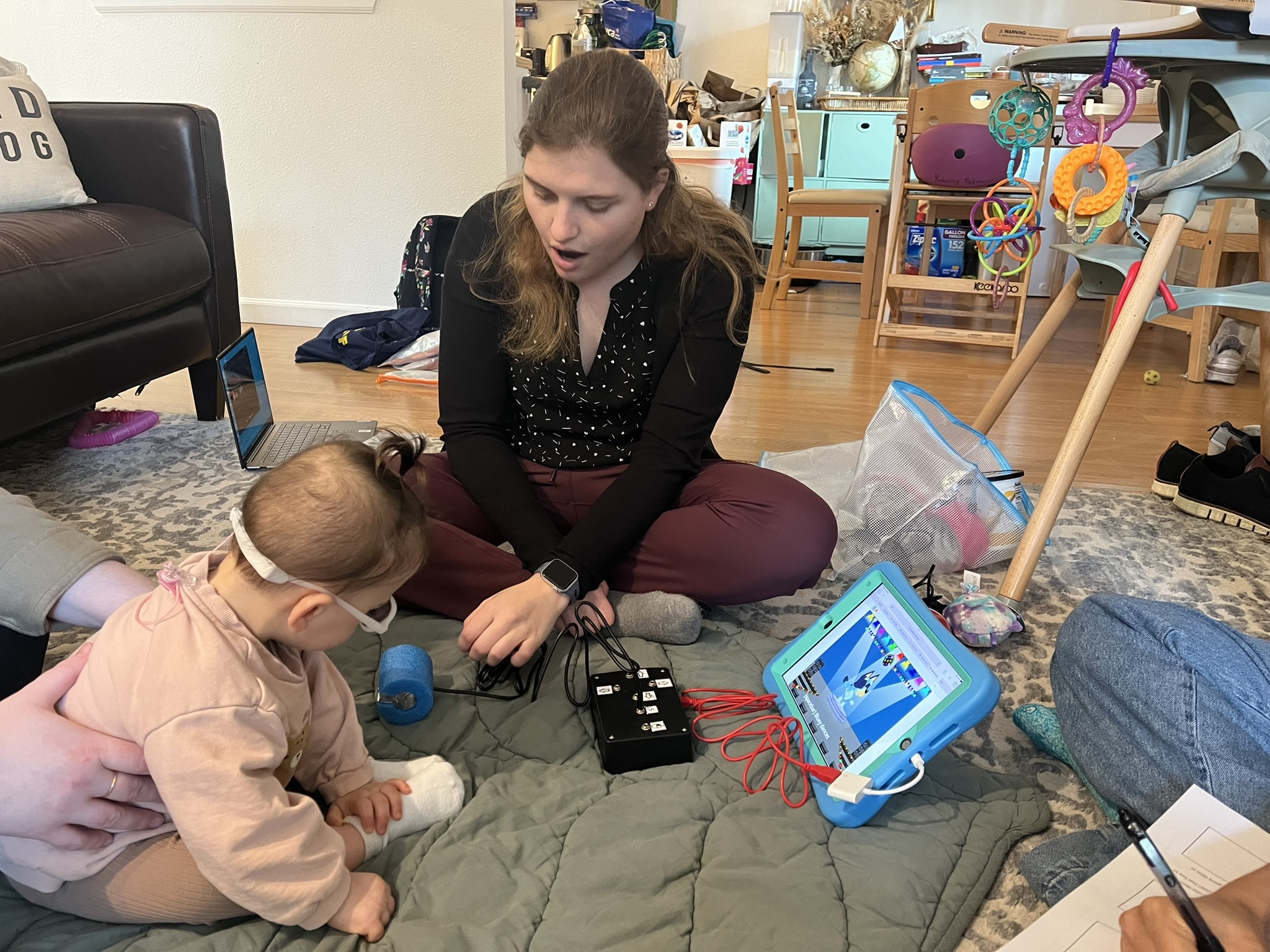
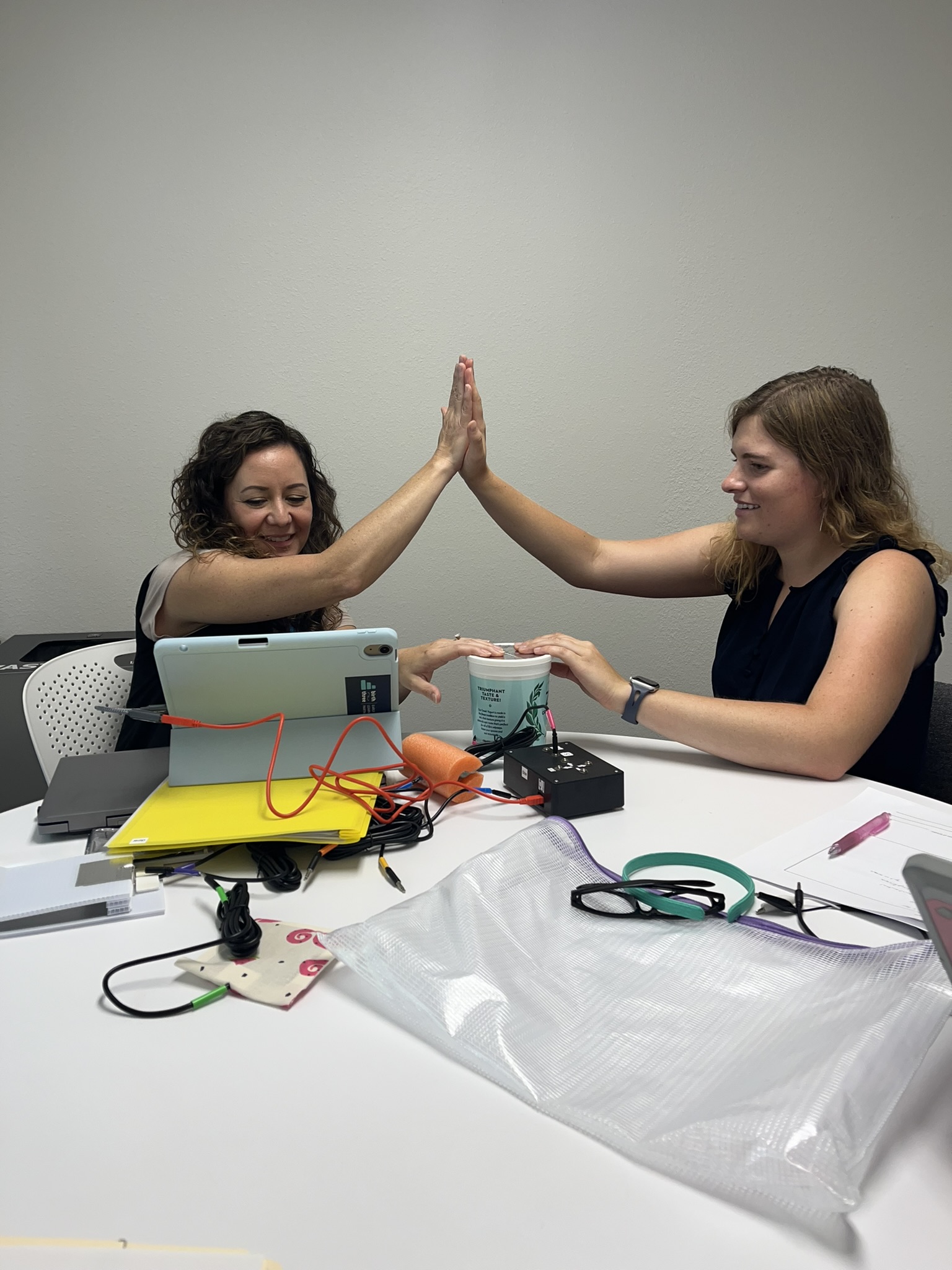
My research often starts on the floor, singing songs with toddlers or adapting devices with cardboard and tape during a therapy session. This was especially true while developing the Switch Kit, a low-cost, switch-accessible digital play kit originally created to help a 2-year-old with cerebral palsy play with her sister. What began as a single, community-initiated capstone project evolved into a multi-year co-design effort involving undergraduate students, families, and clinicians. The open-source Switch Kit has now been recreated across the country and shared at multiple conferences to expand access to early play opportunities for disabled children.
Supporting independent mobility
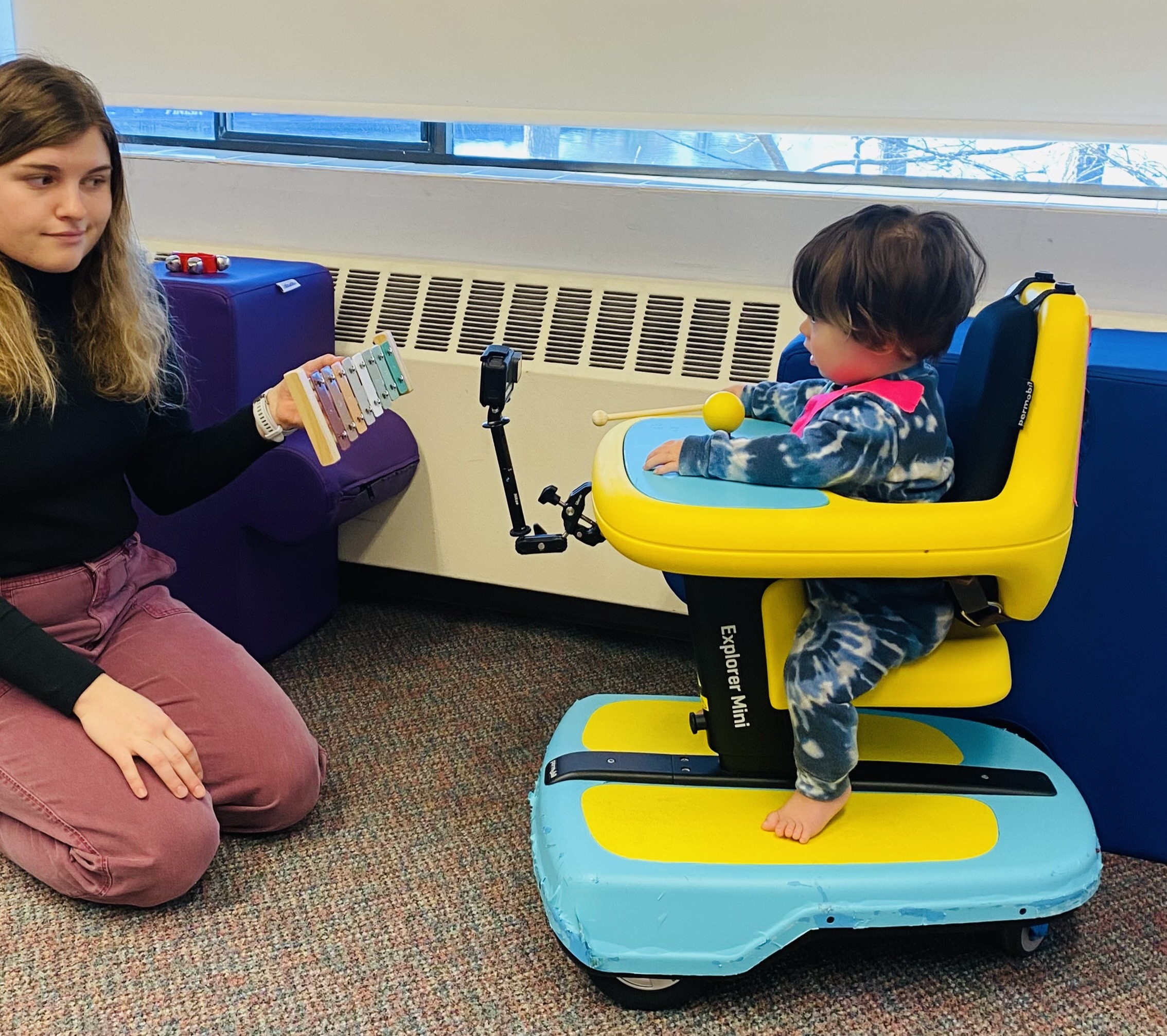
Self-initiated mobility is central to infant and toddler development. My research provides young children opportunities to explore mobility devices while measuring their movements to demonstrate how these technologies support learning. I have demonstrated that the accessibility of the built environment significantly impacts how children move and interact. I have contributed to the first studies using the first FDA-cleared powered mobility device for children under three, helping to build evidence that young children benefit from powered mobility at the same age peers start crawling and walking.