Resources
Explore guides, tutorials, and ideas for getting the most out of your Switch Kit.
Using the Switch Kit with an iPad or iPhone
The Switch Kit can be used with Switch Control, an accessibility feature built into iPadOS and iPhoneOS. Switch Control allows you to use an adaptive switch to navigate and interact with your iPad or iPhone.
Getting started
- Connect your switch to the Switch Kit Input Device.
- Connect the Input Device to your iPad.
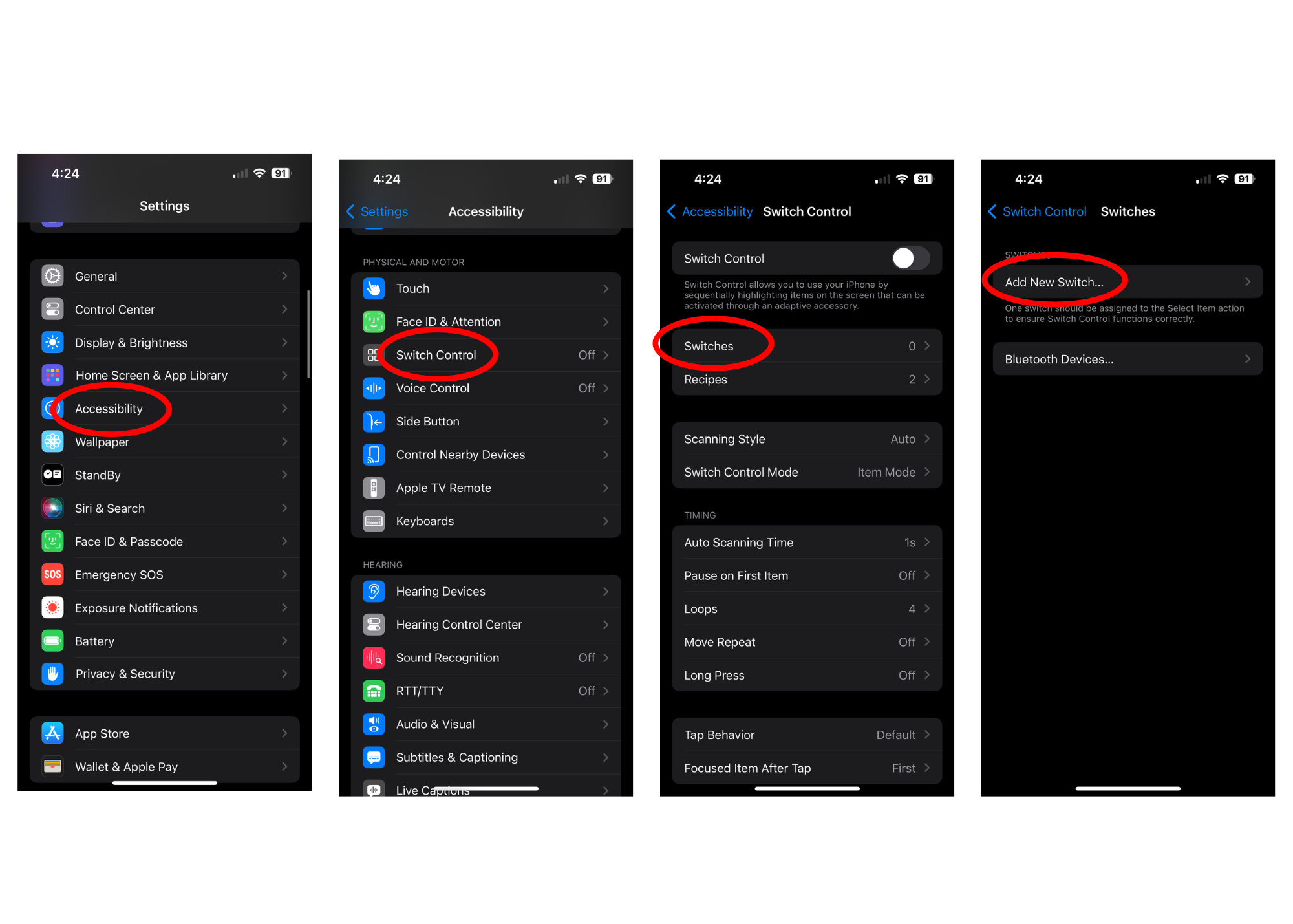
- Open Settings → Accessibility → Switch Control.
- Select Switches.
- Select Add New Switch.
- Activate your switch when prompted.
- Give the switch a name.
- Choose the action you want the switch to perform.
For more information about Switch Control, see Apple’s Switch Control guide.
Want to learn more?
We’ve created a step-by-step guide for using the Switch Kit with an iPad, including additional setup information and examples.
Creating your own games in Scratch
The Switch Kit can be used with Scratch, a free educational coding platform that lets you create games, animations, and interactive activities by dragging and dropping code blocks.
You don’t need to know how to write code to get started. A simple switch-accessible activity can be created with just a few blocks.
Create a simple cause-and-effect game
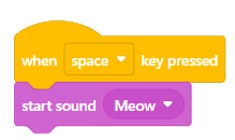
For example, you can create an activity where pressing a switch makes character play a sound. In Scratch, the activity can be created using two blocks: “When space key pressed” and “start sound”. Because the Switch Kit can translate a switch press into a spacebar input, activating the switch triggers the Scratch activity.
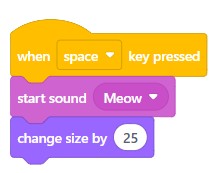
You can then add additional blocks to create more feedback. For example: “change size by 25%”. Now, pressing the switch can make the character play a sound and grow larger. This simple approach can be used to create activities that respond to a child’s actions with sounds, animations, movement, color changes, and other forms of feedback.
Why use Scratch?
Scratch makes it possible for families, clinicians, educators, and other beginners to create and adapt activities without a coding background.
You can customize activities around:
- a child’s favorite characters
- favorite songs or sounds
- preferred colors and animations
- different switch inputs
- different levels of complexity
- specific play or learning games.
You can start with a simple cause-and-effect activity and gradually add more interactions as the user becomes familiar with the Switch. Watch this tutorial from one of the Switch Kit creators demonstrating how to create a simple cause-and-effect game in Scratch.
Principles for Switch-accessible Games
When creating activities for the Switch Kit, keep these principles in mind.
High-contrast
Use colors that are easily distinguishable from each other. Avoid using red and green together as they can be difficult for colorblind users to differentiate. Consider adding an optional black only background so users can make it even more high-contrast.
Provide multiple types of feedback
Give the user more than one indication that their switch press was recognized. For example, combine:
- Sound: A chime, song, or other sound effect
- Visual: An animation, color change, or character movement
Multiple types of feedback can help make the connection between the user’s action and the game’s response clear.
Make responses reliable
Make sure the game responds consistently to switch inputs. A switch press should produce a predictable response every time. Test your game to identify missed inputs, bugs, or unexpected behaviors.
Keep controls consistent
Keep the controls simple and consistent throughout the game, and across games. A rule of thumb we use is:
- One switch: Spacebar and/or mouse click
- Two switches: Left and right arrow keys
- Three or more switches: Use additional arrow keys or other available inputs
Consistent controls make it easier for users to learn how their switches affect the activity, as well as, making switching between games easier.
Make it fun
Choose activities, characters, sounds, and themes that are interesting and motivating for the user. A simple activity built around something a child loves may be more engaging than a complex game. Follow the user’s interests and let them help guide the activity.